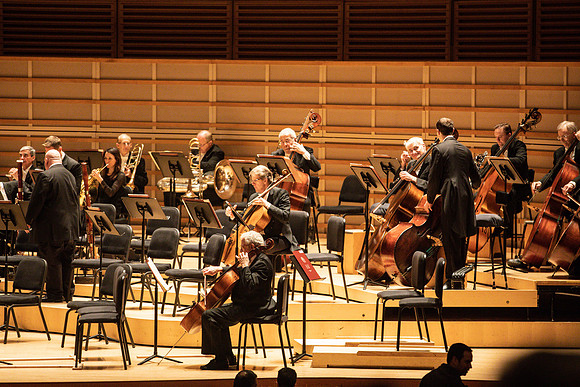
20190227_Chicago_Synphony_Orchestra_MG_5138
CHICAGO SYMPHONY ORCHESTRA
Riccardo Muti, Zell Music Director
Program:
TCHAIKOVSKY Symphony No. 5
RIMSKY-KORSAKOV Scheherazade
“Muti and Chicago Symphony are brilliant, repeatedly.”
- San Francisco Classical Voice
The Chicago Symphony Orchestra (CSO) is consistently hailed as one of the greatest orchestras in the world. From baroque through contemporary music, the CSO commands a vast repertoire.
Riccardo Muti, born in Naples, Italy, is one of the preeminent conductors of our day. In 2010, when he became the tenth music director of the Chicago Symphony Orchestra (CSO), he already had more than forty years of experience at the helm of the Maggio Musicale Fiorentino, Philharmonia Orchestra, Philadelphia Orchestra, and Teatro alla Scala. He also guest conducts for orchestras and in opera houses all over the world!
No other composer wrote music that speaks more eloquently of human triumphs over adversity than Ludwig van Beethoven. It was, therefore, fitting that the Chicago Symphony Orchestra returned to the Kravis Center for the Performing Arts Tuesday with an all-Beethoven program, especially after last year’s gloomy concert that coincided with the school shooting in Parkland.
Under the direction of world-renowned music director Riccardo Muti, the orchestra provided the sold-out house with superb performances of some of the most riveting music ever written. The program started with Beethoven’s “Leonore Overture No. 3, Op. 72b.” Initially written for the introduction of the opera “Fidelio,” it is nowadays performed at the end of the opera itself, just before the redeeming finale.
Muti’s reading was generally on the romantic side. He favored broad brushstrokes in phrasing, stark dynamic contrasts and a lush sound that was almost Brahmsian at times. But he was also was capable of bringing out transparent textures in the more intimate moments. His command of rhythm — especially in the written out accelarandi and ritardandi in the score — was particu