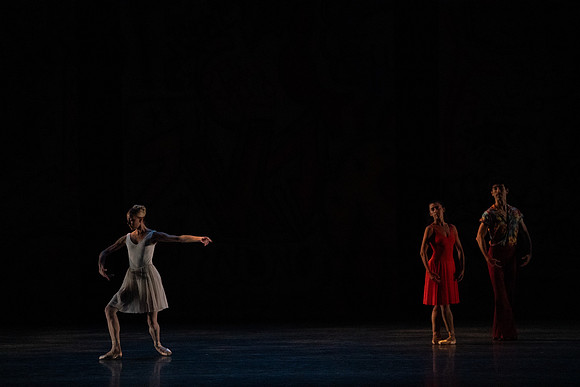
20260430_Deuce Coupe_Twyla No Makeup_DSC4010
“Deuce Coupe,”
Twyla Tharp’s Deuce Coupe is considered the first crossover ballet, blending classical ballet with contemporary social dance. Commissioned by Robert Joffrey for The Joffrey Ballet, the piece premiered in 1973, set to 14 songs by The Beach Boys. The work merges everyday gestures with ballet vocabulary, creating a unique and energetic theatrical experience. A solo dancer performs a alphabetic (but not-so-straightforward) sequence of classical ballet steps, beginning with Ailes de pigeon and progressing to Voyagé in an unexpected, free-spirited way.
Deuce Coupe is a "vividly American dance" (New York Times) that celebrates dynamic spontaneity, marking a revolutionary moment in the evolution of ballet.
“Deuce Coupe,” a fascinating new work by Twyla Tharp and the latest premiere of the City Center Joffrey Ballet season, received an unusually enthusiastic, even delirious, For many of Miss Tharp's admirers, she can do no wrong. This is a foolish attitude but the absolute passions aroused in her favor are exhilarating in themselves. It has been a long time since a choreographer has caused such excitement, and that is to be welcomed. It might be noted that in “Deuce Coupe,” Miss Tharp did a lot of right and just a bit of wrong.
Creativity and originality, including her very own movement vocabulary, have always marked her work. Miss Tharp is perhaps the only real survivor of the experimental choreographers of the mid‐nineteen‐sixties who has never turned away from the dance element. Others have turned to “theater” or to incorporating their life‐styles into their performances.
But‐Miss Tharp is still concerned with movement. The courage with which she has retained her integrity in working with the Joffrey, the company most scorned by her supporters, is to be saluted. Karl Marx, we know, asked to be saved from the Marxists. Perhaps Tharp needs to be saved from the Tharpists.
“Deuce Coupe” is a very attractive, enjoyable piece that