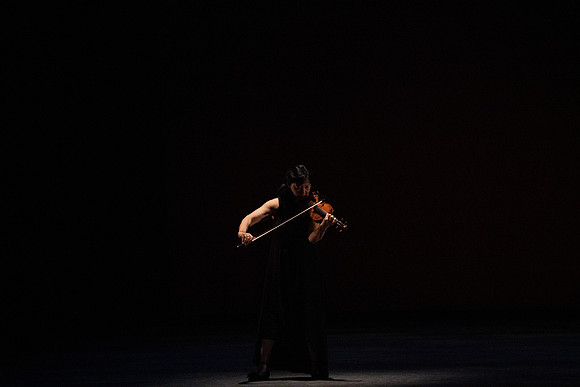
20250327_Chaconne_DR_DSC2843
Chaconne 1942
José Limón’s Chaconne is a masterclass in sculptural movement and musical sensitivity. Created in 1942, this solo distills the essence of Limón’s artistry—fluid yet commanding, deeply expressive yet structured with restraint. Set to Bach’s transcendent Chaconne, the piece transforms the music’s sweeping grandeur into a powerful exploration of strength, grace, and humanity.
Choreographer
José Limón (1908–1972) was a pioneering force in modern dance, celebrated for his deeply humanistic approach to movement. Born in Mexico and later moving to the U.S., Limón studied under modern dance legends Doris Humphrey and Charles Weidman before founding his own company in 1946. His works, including The Moor’s Pavane and Missa Brevis, emphasize gravity, breath, and storytelling through the body.
Chaconne (1942), set to Bach’s music, exemplifies Limón’s virtuosic yet restrained style, showcasing his belief that dance can deeply express the human spirit, a philosophy that shaped his enduring legacy.
The Score
Johann Sebastian Bach (1685–1750) was a German composer, organist, and violinist, whose profound mastery of counterpoint, harmony, and musical structure solidified his legacy as a cornerstone of classical music. He was a prolific composer, producing hundreds of works that showcased his technical brilliance and deep emotional expression. His influence on music history is immeasurable, shaping both Baroque music and generations of musicians across genres.
Bach’s Chaconne from Partita No. 2 in D minor is one of the most revered solo violin works ever composed. Written in the early 18th century, the piece is structured around a repeating harmonic progression, evolving into a breathtaking display of variation and depth. Often described as a monument of Western music, the Chaconne has inspired countless adaptations, including arrangements for piano, guitar, and full orchestra. Its grandeur and emotional intensity provide a rich foundati