Thank you for your patience while we retrieve your images.
Uploaded 11-Nov-16
Taken 10-Nov-16
Visitors 3


2 of 457 photos
Thumbnails
Info
Categories & Keywords

Category:
Subcategory:
Subcategory Detail:
Keywords:2016, Alex, Alok, Aquino, Arsht, Assistant, Azoulay, Azoulay, Azoulay, Benjamin, Bernard, Brumley, Carmen, Center, Chorus, City, Clark, Conductor, Conductor, Corbacio, Costume, Courtney, Dancaire, Daniel, Daniel, Daniel, Danis, Darwin, Davila, Designer, Designer, Designer, Designer, Director, Dominick, Don, Dreambay, Elena, English, Enterprises, Escamillo, Florida, Frasquita, Gallery, Galvan, Grand, Hailey, Hesser, J%d, Jose, Jose, Kansas, Karl, Katherine, Keith, Kenneth, Kozak, Kuhn, Kumar, Kuster, Laura, Le, Le, Leon, Liam, Lighting, Limited, Lyric, Make-up, Malabar, Manager, Maria, Master, Mercedes, Miami, Micaela, Michael, Miller, Montiel, Morales, Nicholas, Opera, Opera, Opera, Production, Production, Projected, Projected, R%d, Rafael, Ramon, Ramon, Remendado, Roche, Ryan, Schaefer, Set, Soare, Spanish, Stage, Studio, Sue, Susan, T%d, Tara, Taylor, Tebar, Tebar, Titles, Titles, Uzan, Venditti, W%d, Ward, Wig, Yunker, Zuniga, and, backstages, digital, of
Photo Info

Dimensions5500 x 3590
Original file size1.01 MB
Image typeJPEG
Color spacesRGB
Date taken10-Nov-16 23:26
Shooting Conditions

FlashNot fired, compulsory mode
Exposure modeAuto
Exposure prog.Shutter priority
ISO speedISO 2000
Metering modePattern
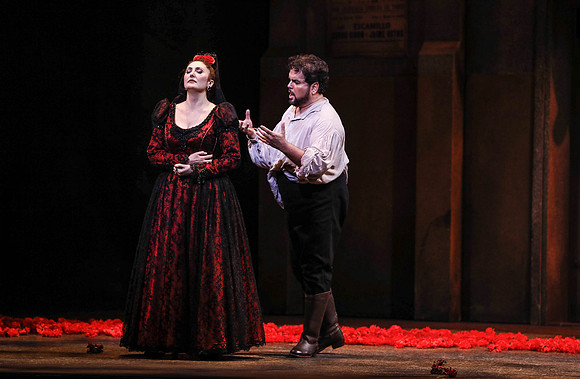
Carmen Florida Grand Opera by Henri Meilhac and Ludovic Halevy

Carmen Florida Grand Opera by Henri Meilhac and Ludovic Halevy

strongemCarmen/em/strong (French pronunciation: ​a href="https://en.wikipedia.org/wiki/Help:IPA/French" target="_blank"[kaʁ/aa href="https://en.wikipedia.org/wiki/Help:IPA/French" target="_blank"mɛ/aa href="https://en.wikipedia.org/wiki/Help:IPA/French" target="_blank"n]/a; Spanish: a href="https://en.wikipedia.org/wiki/Help:IPA/Spanish" target="_blank"[ˈkarmen]/a) is an a href="https://en.wikipedia.org/wiki/Opera" target="_blank"opera/a in four acts by French composer a href="https://en.wikipedia.org/wiki/Georges_Bizet" target="_blank"Georges Bizet/a. The a href="https://en.wikipedia.org/wiki/Libretto" target="_blank"libretto/awas written by a href="https://en.wikipedia.org/wiki/Henri_Meilhac" target="_blank"Henri Meilhac/a and a href="https://en.wikipedia.org/wiki/Ludovic_Hal%C3%A9vy" target="_blank"Ludovic Haleacute;vy/a, based on a a href="https://en.wikipedia.org/wiki/Carmen_(novella)" target="_blank"novella of the same title/a by a href="https://en.wikipedia.org/wiki/Prosper_M%C3%A9rim%C3%A9e" target="_blank"Prosper Meacute;rimeacute;e/a. The opera was first performed at the a href="https://en.wikipedia.org/wiki/Op%C3%A9ra-Comique" target="_blank"Opeacute;ra-Comique/a in Paris on 3 March 1875, where its breaking of conventions shocked and scandalized its first audiences.br/Bizet died suddenly after the 33rd performance, unaware that the work would achieve international acclaim within the following ten years. emCarmen/em has since become one of the most popular and frequently performed operas in the classical a href="https://en.wikipedia.org/wiki/Western_canon" target="_blank"canon/a; the quot;a href="https://en.wikipedia.org/wiki/Habanera_(aria)" target="_blank"Habanera/aquot; from act 1 and the quot;a href="https://en.wikipedia.org/wiki/Toreador_Song" target="_blank"Toreador Song/aquot; from act 2 are among the best known of all operatic arias.br/The opera is written in the genre of ema href="https://en.wikipedia.org/wiki/Op%C3%A9ra_comique" target="_blank"opeacute;ra comique/a/em with musical numbers separated by dialogue. It is set in southern Spain and tells the story of the downfall of Don Joseacute;, a naiuml;ve soldier who is seduced by the wiles of the fiery a href="https://en.wikipedia.org/wiki/Romani_people" target="_blank"gypsy/a Carmen. Joseacute; abandons his childhood sweetheart and deserts from his military duties, yet loses Carmen's love to the glamorous a href="https://en.wikipedia.org/wiki/Torero" target="_blank"matador/a Escamillo, after which Joseacute; kills her in a jealous rage. The depictions of proletarian life, immorality, and lawlessness, and the tragic death of the main character on stage, broke new ground in French opera and were highly controversial.br/After the premiere, most reviews were critical, and the French public was generally indifferent. emCarmen/em initially gained its reputation through a series of productions outside France, and was not revived in Paris until 1883. Thereafter, it rapidly acquired popularity at home and abroad. Later commentators have asserted that emCarmen/em forms the bridge between the tradition of emopeacute;ra comique/em and the realism or ema href="https://en.wikipedia.org/wiki/Verismo" target="_blank"verismo/a/em that characterised late 19th-century Italian opera.br/The music of emCarmen/em has since been widely acclaimed for brilliance of melody, harmony, atmosphere, and orchestration, and for the skill with which Bizet musically represented the emotions and suffering of his characters. After the composer's death, the score was subject to significant amendment, including the introduction of a href="https://en.wikipedia.org/wiki/Recitative" target="_blank"recitative/a in place of the original dialogue; there is no standard edition of the opera, and different views exist as to what versions best express Bizet's intentions. The opera has been recorded many times since the first a href="https://en.wikipedia.org/wiki/Gramophone_record#78_rpm_disc_developments" target="_blank"acoustical/a recording in 1908, and the story has been the subject of many screen and stage adaptationsbr/ br/Backgroundbr/ br/Prosper Meacute;rimeacute;e, whose novella emCarmen/em of 1845 inspired the operabr/In the Paris of the 1860s, despite being a a href="https://en.wikipedia.org/wiki/Prix_de_Rome" target="_blank"Prix de Rome/a laureate, Bizet struggled to get his stage works performed. The capital's two main state-funded opera housesmdash;a href="https://en.wikipedia.org/wiki/Paris_Opera" target="_blank"the Opeacute;ra/a and the a href="https://en.wikipedia.org/wiki/Op%C3%A9ra-Comique" target="_blank"Opeacute;ra-Comique/amdash;followed conservative repertoires that restricted opportunities for young native talent. Bizet's professional relationship with a href="https://en.wikipedia.org/wiki/L%C3%A9on_Carvalho" target="_blank"Leacute;on Carvalho/a, manager of the independent a href="https://en.wikipedia.org/wiki/Th%C3%A9%C3%A2tre_Lyrique" target="_blank"Theacute;acirc;tre Lyrique/a company, enabled him to bring to the stage two full-scale operas, a href="https://en.wikipedia.org/wiki/Les_p%C3%AAcheurs_de_perles" target="_blank"emLes pecirc;cheurs de perles/em/a (1863) and a href="https://en.wikipedia.org/wiki/La_jolie_fille_de_Perth" target="_blank"emLa jolie fille de Perth/em/a (1867), but neither enjoyed much public success.br/ br/When artistic life in Paris resumed after the a href="https://en.wikipedia.org/wiki/Franco-Prussian_War" target="_blank"Franco-Prussian War/a of 1870ndash;71, Bizet found wider opportunities for the performance of his works; his one-act opera a href="https://en.wikipedia.org/wiki/Djamileh" target="_blank"emDjamileh/em/a opened at the Opeacute;ra-Comique in May 1872. Although this failed and was withdrawn after 11 performances, it led to a further commission from the theatre, this time for a full-length opera for which a href="https://en.wikipedia.org/wiki/Henri_Meilhac" target="_blank"Henri Meilhac/a and a href="https://en.wikipedia.org/wiki/Ludovic_Hal%C3%A9vy" target="_blank"Ludovic Haleacute;vy/a would provide the libretto.[5] Haleacute;vy, who had written the text for Bizet's student opera a href="https://en.wikipedia.org/wiki/Le_docteur_Miracle" target="_blank"emLe docteur Miracle/em/a (1856), was a cousin of Bizet's wife, a href="https://en.wikipedia.org/wiki/Genevi%C3%A8ve_Hal%C3%A9vy" target="_blank"Geneviegrave;ve/a; he and Meilhac had a solid reputation as the librettists of many of a href="https://en.wikipedia.org/wiki/Jacques_Offenbach" target="_blank"Jacques Offenbach/a's operettas.br/ br/Bizet was delighted with the Opeacute;ra-Comique commission, and expressed to his friend Edmund Galabert his satisfaction in quot;the absolute certainty of having found my pathquot;.[5] The subject of the projected work was a matter of discussion between composer, librettists and the Opeacute;ra-Comique management; a href="https://en.wikipedia.org/wiki/Adolphe_de_Leuven" target="_blank"Adolphe de Leuven/a, on behalf of the theatre, made several suggestions that were politely rejected. It was Bizet who first proposed an adaptation of a href="https://en.wikipedia.org/wiki/Prosper_M%C3%A9rim%C3%A9e" target="_blank"Prosper Meacute;rimeacute;e/a's novella a href="https://en.wikipedia.org/wiki/Carmen_(novella)" target="_blank"emCarmen/em/a. Meacute;rimeacute;e's story is a blend of travelogue and adventure yarn, possibly inspired by the writer's lengthy travels in Spain in 1830, and had originally been published in 1845 in the journal a href="https://en.wikipedia.org/wiki/Revue_des_deux_Mondes" target="_blank"emRevue des deux Mondes/em/a. It may have been influenced in part by a href="https://en.wikipedia.org/wiki/Alexander_Pushkin" target="_blank"Alexander Pushkin/a's 1824 poem quot;a href="https://en.wikipedia.org/wiki/The_Gypsies_(poem)" target="_blank"The Gypsies/aquot;, a work Meacute;rimeacute;e had translated into French; it has also been suggested that the story was developed from an incident told to Meacute;rimeacute;e by his friend the Countess Montijo.Bizet may first have encountered the story during his Rome sojourn of 1858ndash;60, since his journals record Meacute;rimeacute;e as one of the writers whose works he absorbed in those years