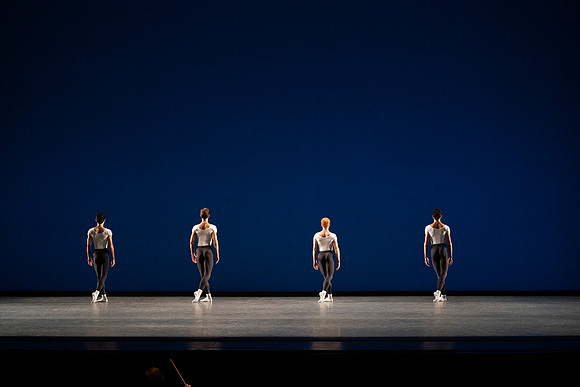
Agon is a 22-minute
ballet for twelve dancers with music by
Igor Stravinsky. It was choreographed by
George Balanchine. Stravinsky began composition in December 1953 but was interrupted the next year; he resumed work in 1956 and concluded on April 27, 1957. The music was premiered in Los Angeles at
UCLA's
Royce Hall on June 17, 1957, conducted by
Robert Craft. Stravinsky himself conducted the sessions for the work's first recording the following day on June 18, 1957.
[1] Agon was first performed on stage by the
New York City Ballet at the
City Center of Music and Drama on December 1, 1957.
[2]The composition's long gestation period covers an interesting juncture in Stravinsky's composing career, in which he moved from a
diatonic musical idiom to one based on
twelve-tone technique; the music of the ballet thus demonstrates a unique symbiosis of musical idioms. The ballet has no story, but consists of a series of dance movements in which various groups of dancers interact in pairs, trios, quartets, etc. A number of the movements are based on 17th-century French court dances –
saraband,
galliard and
bransle. It was danced as part of City Ballet's 1982
Stravinsky Centennial Celebration.
The title of the ballet, Agon, is a Greek word which means “contest”, “protagonist” but also “anguish” or “struggle”.